About this website
Houses of Roman Timgad is an open digital humanities project that runs alongside a PhD dissertation in progress. This website is the public, open-access companion to that longer work.
It serves three purposes:
Shares selected data from the roughly one hundred houses excavated at Timgad since 1881, releasing catalog entries and research outputs where making them open serves the field.
Documents the journey and the insights along the way, the methods being tried, the reasoning behind choices, and the questions that surface as the research develops.
Makes space for shorter essays and field notes at the edges of the dissertation, on method, scholarship, teaching, and the questions that houses raise when taken seriously.
The full synthesis of the research will appear in the dissertation and, eventually, in a book. This website is designed to share in kind, not everything, but enough to keep the work in conversation as it grows. Over the coming years, five core endeavors will shape what gets added: a comprehensive catalog of the excavated houses, microanalyses of five primary case studies using space syntax and 3D modeling, an open-access database releasing selected excavation data in a standardized form, a decolonizing approach to the colonial-era sources most of that data sits inside, and a comparative framework drawing on Volubilis and Bulla Regia to trace regional patterns across Roman North Africa.
The argument
Houses are not passive containers. They are active agents. They shape how the people inside them move, work, gather, and see one another. They carry that shaping forward across generations as habit, posture, and expectation.
Scholarship on Roman houses has spent more than a century measuring every provincial site through the lens of Pompeii, the atrium-peristyle house as a yardstick, and the ideals laid out in Vitruvius. Timgad’s houses rarely fit that template. As a result, they have been read as failed imitations, or left out of the conversation altogether. This project starts from a different premise, and it responds to three prevailing problems in how Roman houses have been read.
The Vitruvian Legacy. One atypical elite form, preserved spectacularly at a handful of Italian sites, has become the measuring stick for houses across the empire.
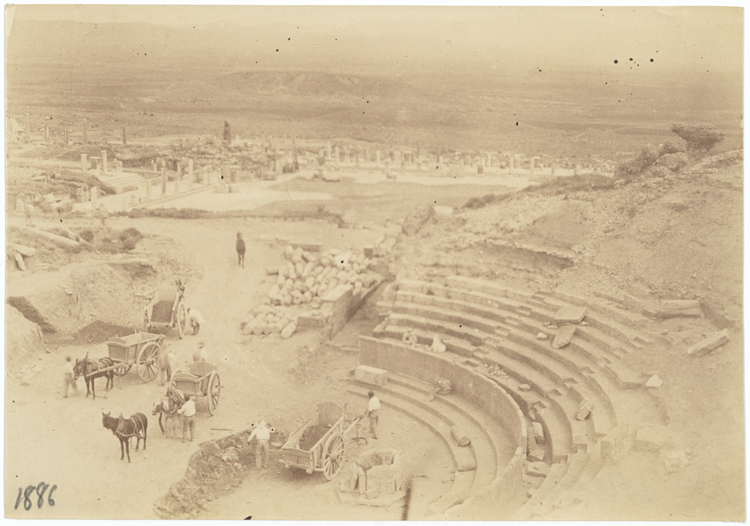
Colonial Echoes. French archaeologists excavated Timgad from the 1880s through the 1950s, seeing themselves as heirs to Rome's "civilizing mission." Their biases still run through the reports that form most of the evidence base.
The Absent House. Even scholars who have pushed back hard against Romanization have continued to treat provincial domestic space as background, rather than as the place where identities were actually made.
At the heart of this project sits one research question:
The short version of the answer this project is building toward: domestic architecture at Timgad shows provincial inhabitants actively negotiating their relationships to empire through spatial practice, not as passive recipients of Roman culture, but as agents shaping their own forms of belonging.
The theoretical frame comes from Pierre Bourdieu’s habitus, the idea that daily movement through space produces embodied social dispositions, and from David Mattingly’s discrepant identities, the recognition that provincial inhabitants held multiple, context-dependent identities at once. Methods draw on space syntax, 3D reconstruction, and a critical reading of the colonial excavation reports that still carry most of the evidence.
About the Author
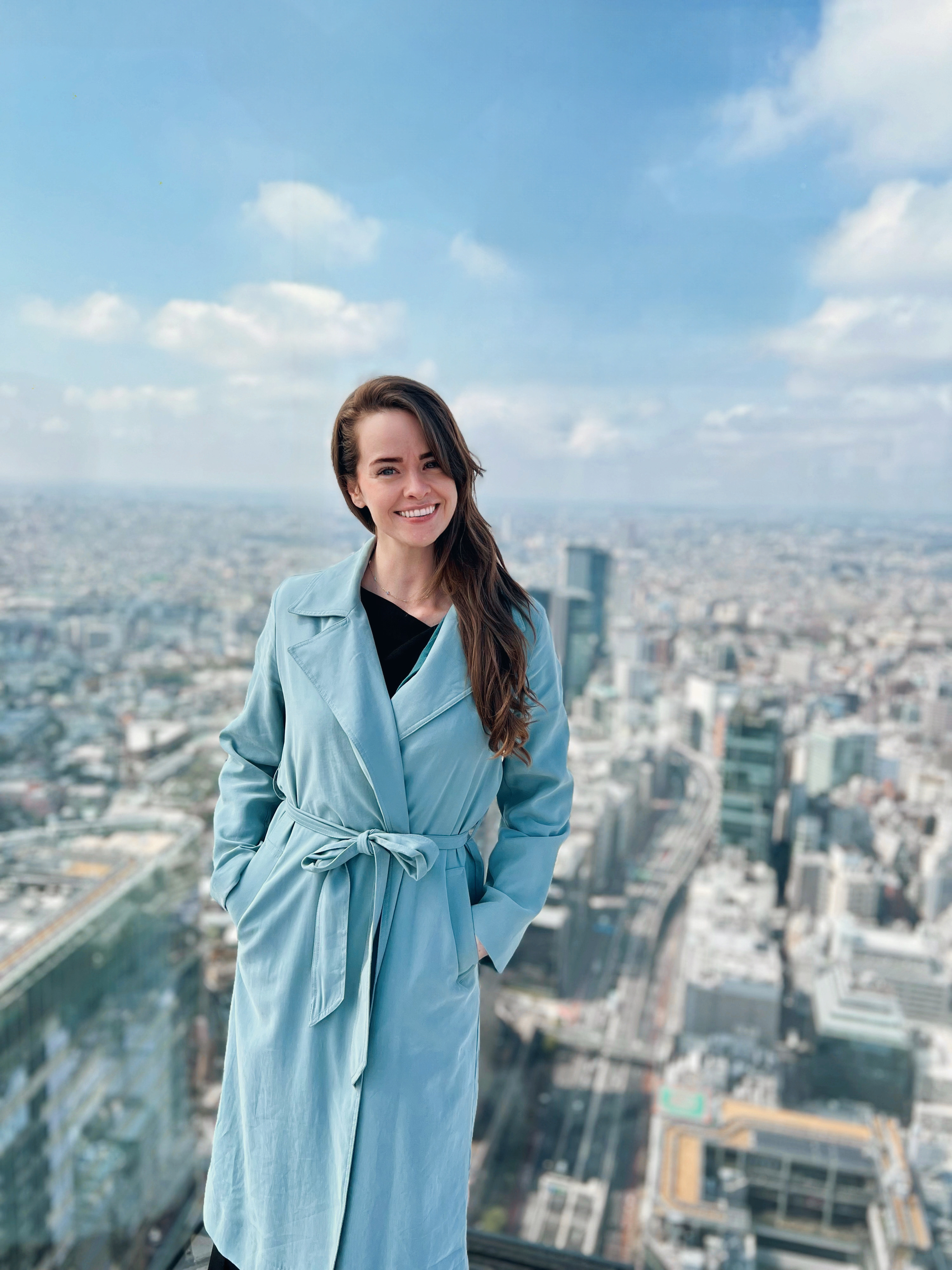
Kim Edher is an instructor of Classical Studies and History at Langara College and a PhD candidate in Classical Archaeology in the Ancient Mediterranean and Near Eastern Studies (AMNE) department at the University of British Columbia (UBC). Her dissertation examines domestic spaces across Roman North Africa (المغرب العربي), drawing on Timgad, Volubilis, and Bulla Regia to understand how people actually lived and worked in these spaces. The work uses spatial analysis, sensory reconstruction, and digital tools to bring marginalized spaces and people to life.
Her MA thesis explored rural religious practices at rock sanctuaries in Roman Spain, building on three seasons of fieldwork at Ilduro in modern Cabrera de Mar. At Langara, she teaches courses on the ancient Greek and Roman worlds, with a focus on the people and places too often left at the margins of the story, and on the threads that still connect antiquity to the present.
Research interests
Acknowledgments
This project owes its shape, first and foremost, to Kim’s committee at UBC: her supervisor Dr. Matthew McCarty, whose scholarship on Roman North Africa and on the politics of how archaeological knowledge gets made has shaped its questions from the start; Dr. Kevin Fisher, who has grounded the methodological side in digital archaeology and space syntax; and Dr. Katharine Huemoeller, whose work in Roman social history and lived experience has helped keep the people behind the evidence at the center of this project. Having had the chance to learn from all three across her master’s and doctoral coursework, Kim carries what they taught her not only into this research but into how she shows up in her own classroom as both instructor and scholar. For that, she is deeply grateful.
The project also owes its shape to the AMNE department’s ongoing support, and to the many researchers, past and present, whose published and unpublished work on Timgad makes it possible to ask new questions at all. Specific intellectual debts are named on the Scholarship page when it launches. The excavators whose colonial-era work forms the core of the evidence base are acknowledged alongside the critical scholarship that continues to rethink their records.
How to get in touch
Corrections, questions, and suggestions are welcome. Email km2133@student.ubc.ca.