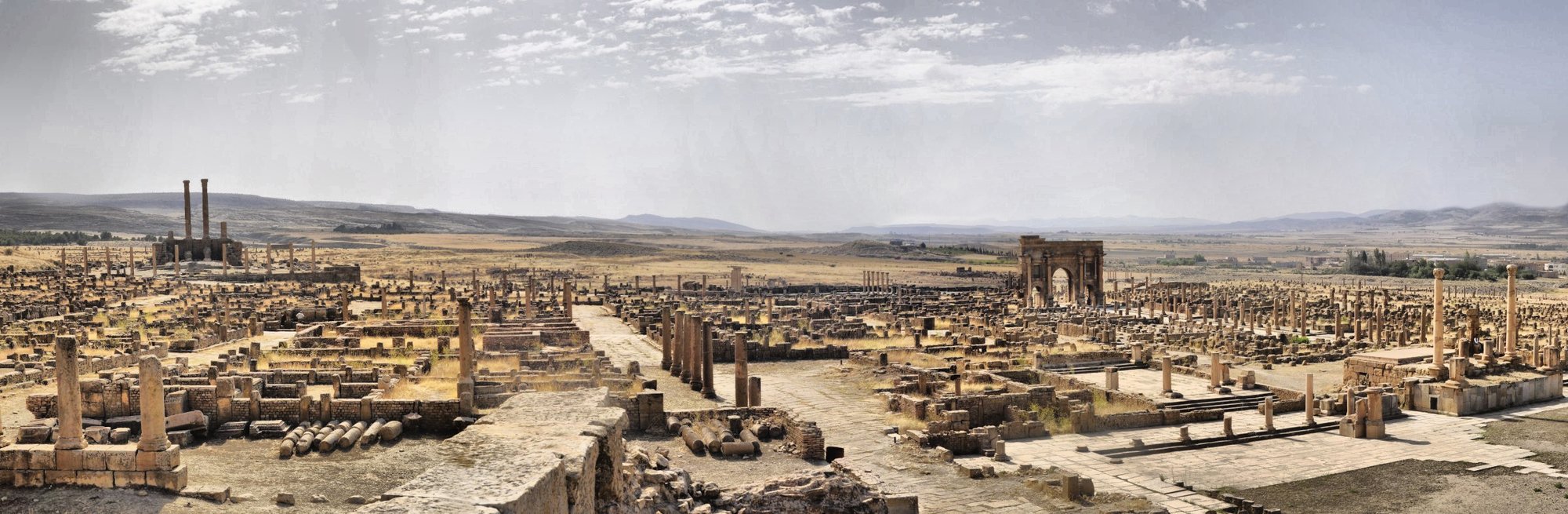
A wide colour panorama of Timgad looking across the excavated city, with the columns of the Capitol rising at the far left, the colonnaded decumanus maximus running through the centre, the Arch of Trajan standing to the right, and the Aurès Mountains on the horizon.

Where work, home, and identity shared walls, and shaped the lives within.

An open digital humanities project cataloging over a hundred houses excavated at Roman Timgad, and the lives lived within their walls.

Panorama of Timgad looking east across the site, with the Capitol columns at left, the colonnaded decumanus, and the Arch of Trajan at centre-right. Photograph by Hamza-sia, 2014, CC BY-SA 3.0, via Wikimedia Commons.

Yvon Thébert wrote that domus, the Latin word for house, referred not only to the walls but also to the people within them. The houses of Timgad, on a high plain in modern Algeria, are exactly that: walls that cannot be read apart from the people who built their lives inside them.

For too long, every Roman house has been read through the lens of Pompeii, as if one Italian template could explain a thousand provincial lives. Timgad’s houses tell a different story: one built and rebuilt by veterans, workshop owners, and local Numidians. This site publishes the data behind a more honest reading, in the open.
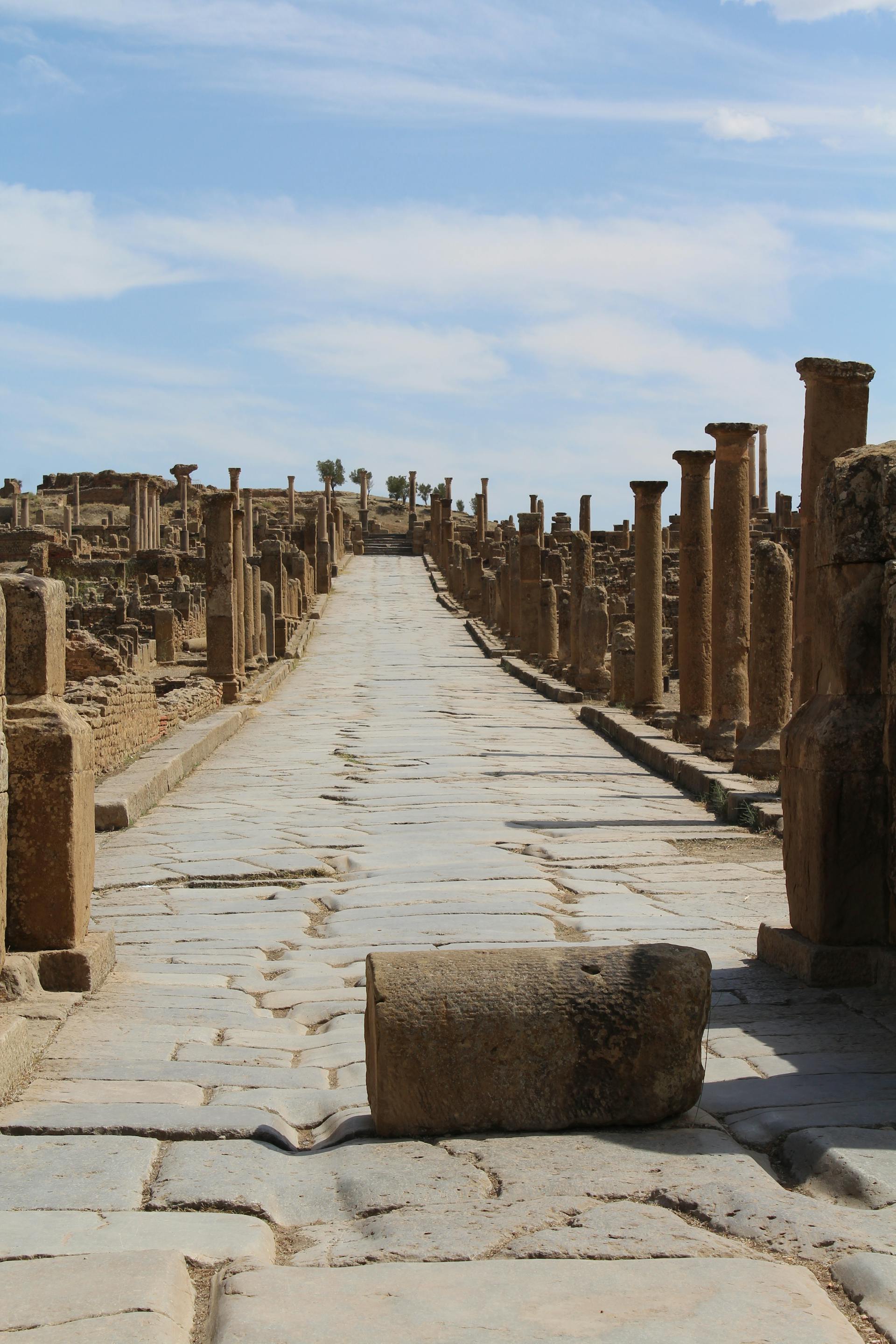
A Roman colonnaded street, lined with weathered sandstone columns, leading toward the horizon under a wide blue sky.
A colonnaded street in Timgad, looking toward the horizon. Photo via Pexels.

Underneath the archaeology sits a larger question, one as alive now as it was nearly two thousand years ago: how people make a home inside an empire they did not choose, and how the spaces we build end up shaping who we become.